Digital Wedding Invitations
Your printed wedding card, rebuilt for the phone — a scrolling page, a short film for WhatsApp, and image cards for status and feed. Drawn from the artwork and cultural register of your own card, not from a template. Get in touch to have one made.
- Vanilla JS
- Hand-authored SVG
- CSS
- Node.js
- Playwright
- Swift · AVFoundation
Most digital wedding invitations are a template with your names dropped into it. This is the opposite: your printed card is the source, and the digital version is built to match it — its artwork, its palette, its typography, and the conventions your family actually observes.
What you get
- A scrolling page — one self-contained file you send as a link. It opens instantly on a phone, works offline apart from the fonts, and has no relative dependencies to break.
- A short film — vertical, H.264, small enough to play inline in a WhatsApp chat on both iOS and Android rather than sitting there as a file to download.
- Image cards — portrait for a status post, square for a feed post, at two raster scales.
- The conveniences that actually help — a countdown to the date, a maps link to each venue, and a calendar entry that opens the phone’s calendar app instead of downloading an inert file.
How it’s built
- Your card is the design brief. Palette sampled from a high-resolution render of your card, its own ornament reproduced, and the type matched — so paper and screen read as one family rather than two unrelated things.
- One source of truth. Every visible string lives in a single content file. A wrong time on a wedding invitation is unrecoverable once it’s sent, so nothing is hardcoded anywhere and every format rebuilds from the same data.
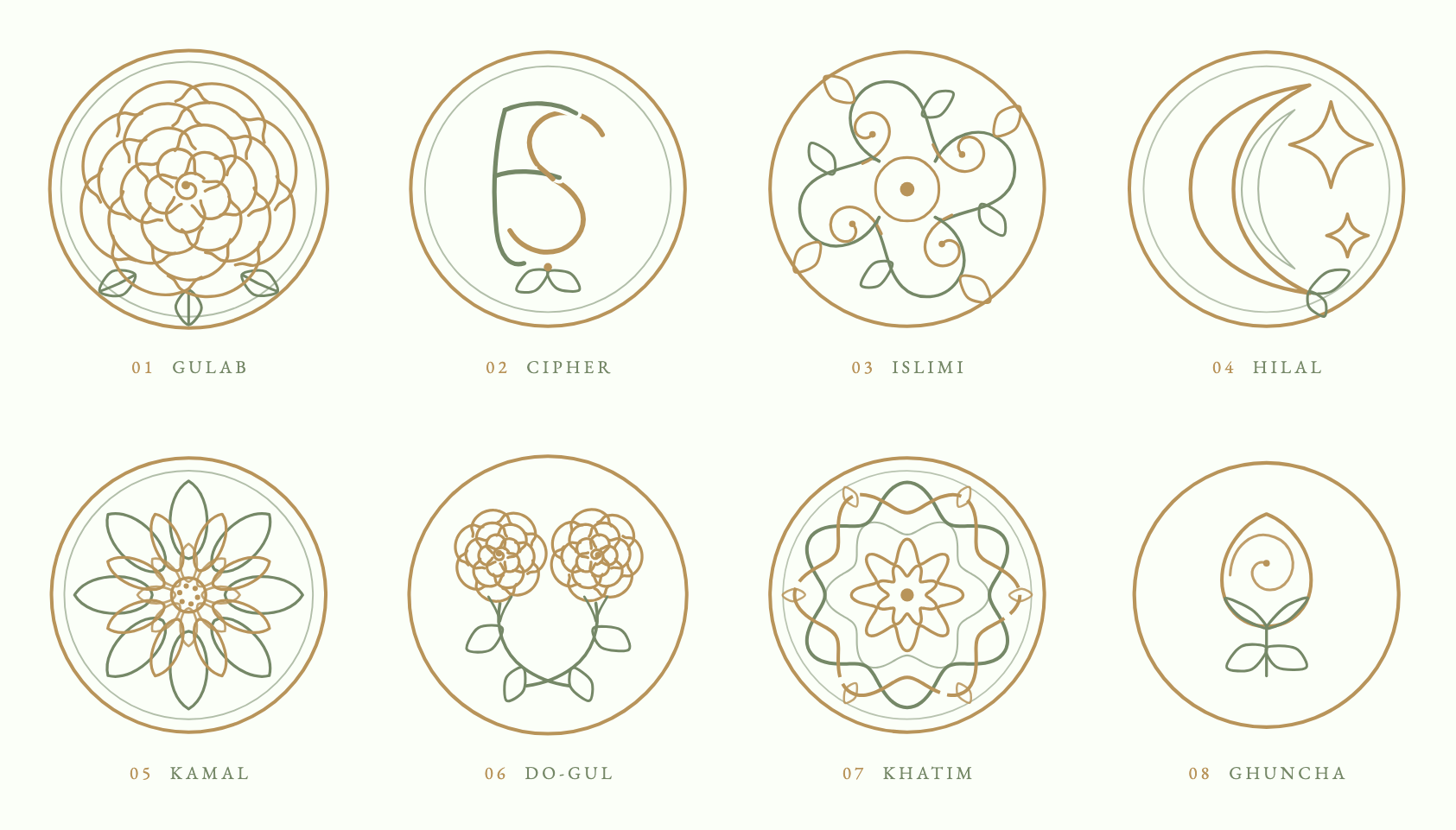
- Hand-drawn, not stock. The ornament — arch, margin vines, envelope seal, monogram — is authored as SVG and studied in variants before one is picked, so it’s yours rather than a clip-art mark.
- Verified, not eyeballed. The build refuses to ship if a fact that must stay private leaks onto the page; QR codes are decoded back out of the finished images and out of frames of the finished video to prove they scan; and the layout is asserted at every width from a small phone upward.
- Your conventions, not a Western default. The first build was an Indian-Muslim invitation, where RSVPs, couple photographs and “our story” timelines are all wrong by default. The governing rule was that the invitation carries what the printed card carries and nothing more. Yours would start from your conventions the same way.
- Private by default. It ships unlisted — no search indexing, no archiving. It’s a link for your guests, not a page for the web.
Status
Built end to end for one wedding — my own, in 2026 — across all four formats. Two of the renditions are live and you can open them right now: one carrying the printed card’s own artwork, and one built entirely from hand-drawn ornament. Same content, same data file, two completely different visual treatments.
It isn’t a self-serve product you can download and fill in; each one is put together around a specific card, which is rather the point.
If you’re getting married and would like one made from your invitation, get in touch.